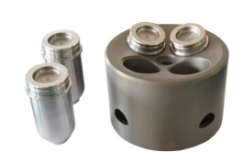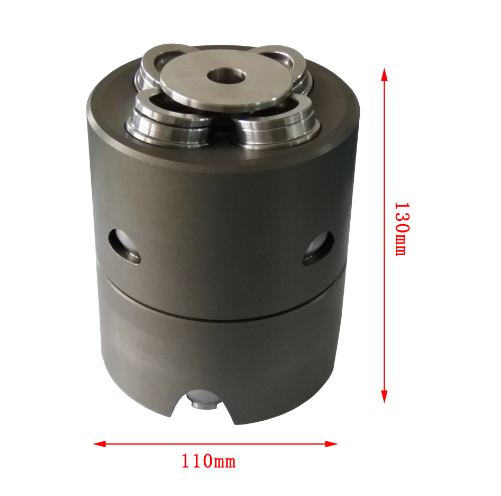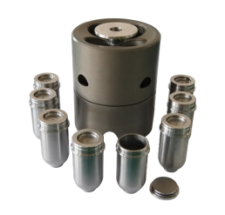


Eight independent positions
Process multiple formulations, compositions or control samples in parallel instead of repeatedly cleaning and reloading one large jar.
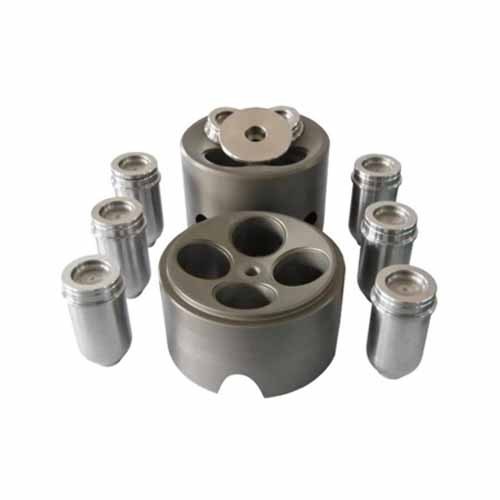
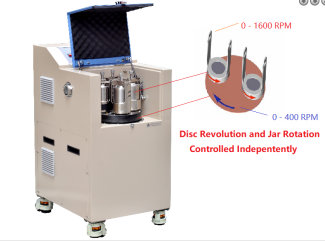
Traditional laboratory milling often requires samples to be processed sequentially, which increases experiment time and can introduce differences between batches. The MJ-15-25SS divides the workflow into eight independent small-volume stainless steel tubes in each set. When installed in the specified MSK-SFM-15 or MSK-SFM-1 system, four sets can support simultaneous milling of up to 32 different materials or formulations under coordinated operating conditions.
Process multiple formulations, compositions or control samples in parallel instead of repeatedly cleaning and reloading one large jar.
Each stainless steel tube is held at an angle. According to the supplied specification, this arrangement provides higher milling energy than a traditional vertical planetary setup.
Suitable for early-stage screening and small sample quantities where conserving research material and increasing experimental coverage are important.
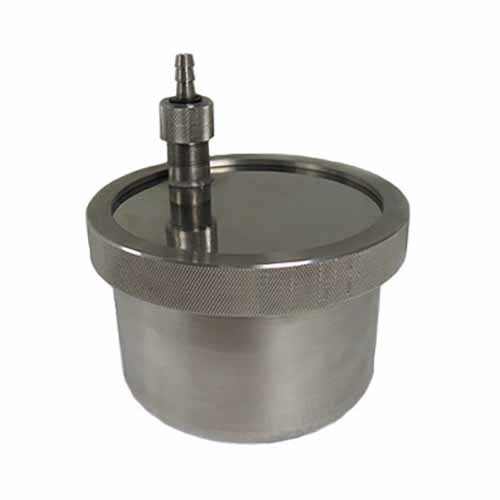
The stated SUS304 stainless steel material provides a durable metallic milling container for compatible laboratory powders and samples.
Parallel tubes help researchers compare several samples within the same milling run, reducing time-related variation between separate batches.
One set includes eight tubes and two holders. Multiple sets can be arranged according to the compatible machine configuration.
| Product model | MJ-15-25SS |
|---|---|
| Product type | High-throughput jar ball mill jar with 8 working stations set |
| Jar/tube material | SUS304 stainless steel |
| Milling positions | 8 positions per set |
| Nominal capacity | 25 mL per position; 200 mL nominal total across eight tubes |
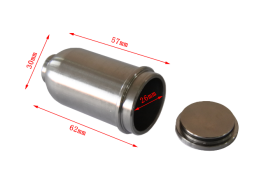
| Tube dimensions | Ø26 mm × 57 mm |
| Tube arrangement | Inclined placement in the holder |
| Compatible equipment | MSK-SFM-15 and MSK-SFM-1 ball mills |
| Maximum stated throughput | Four sets × eight positions = up to 32 different materials in one compatible setup |
| Standard stated configuration | 8 stainless steel tubes and 2 ball mill jar holders
|
| Evaluation point | Single-jar sequential workflow | MJ-15-25SS parallel workflow |
|---|---|---|
| Sample handling | Samples are loaded and processed one after another. | Eight independent samples can be loaded in one set. |
| Experimental comparison | Separate runs may introduce time and condition differences. | Multiple samples can be processed during the same operating cycle. |
| Cleaning frequency | One shared jar may require cleaning between every material. | Independent tubes reduce changeover between parallel samples. |
| Screening throughput | Limited by repeated runs. | Up to 32 materials are stated when four sets are installed on a compatible system. |
| Typical value | Useful for larger individual batches. | Useful for formulation screening and small-volume research. |
This comparison describes workflow differences, not guaranteed processing performance. Actual output depends on machine settings, loading, material properties and grinding media.
Compare several raw-material ratios or additive levels during early-stage formulation development.
Prepare multiple small powder batches for exploratory cathode, anode or solid-electrolyte research, subject to contamination requirements.
Mix or mill several ceramic formulations in parallel before pressing, sintering or characterization.
Screen different supports, active components or preparation conditions using independent small-volume tubes.
Evaluate multiple metallic powder combinations where SUS304 contamination is acceptable and operating limits are confirmed.
Allow several groups or sample sets to run within a coordinated laboratory milling workflow.
Assign each tube a sample ID and define equal or intentionally varied processing conditions.
Add the specified sample and grinding media while keeping each tube within confirmed loading limits.
Close every tube correctly, place all tubes in the holders and install the set according to the ball mill manual.
Use approved settings, monitor the cycle and record tube position, speed, time, media and sample details.
Sample chemistry: review corrosion, reaction and contamination risks associated with SUS304 stainless steel.
Grinding media: select material and size according to the sample, target particle size and acceptable contamination.
Processing method: state whether milling is dry or wet and identify any solvent used.
Batch loading: confirm the permitted sample and media charge rather than filling to the nominal 25 mL volume.
Supply scope: verify tubes, lids, holders, seals, media and any adapters in the formal quotation.
One set contains eight independent 25 mL tubes. The actual usable sample charge is lower than the nominal tube volume because space is required for grinding media and movement.
The specification states that four eight-position sets can be used on a compatible MSK-SFM-15 or MSK-SFM-1 configuration: 4 × 8 = 32 samples. Confirm the exact machine setup before purchase.
The inclined arrangement changes the motion of the media and sample. The product sheet states that it provides higher milling energy than a traditional vertical planetary ball mill arrangement.
The stated configuration includes eight SUS304 tubes measuring Ø26 mm × 57 mm and two ball mill jar holders. Confirm lids, seals, fasteners and media in the quotation.
Any metallic milling container can contribute wear-related contamination depending on material hardness and operating conditions. If iron, chromium or nickel contamination is unacceptable, discuss an alternative jar or media material.
Send your ball mill model and sample-processing plan. Shenyang Kejing Automation Equipment Co., Ltd. can review the required set configuration, material compatibility and supply scope before quotation.
Email Your Inquiry